
Table of Contents
- 1. The complete export document set
- 2. Commercial invoice: the value basis customs actually reads
- 3. Packing list and the weight data everything else depends on
- 4. HS codes and customs valuation: where duty is really decided
- 5. Incoterms: the line that decides who prepares which document
- 6. What incomplete documentation actually costs
- 7. Turn the file into a reusable template
- 8. Four mistakes that cause most of the trouble
- 9. What to do next
Most export delays are not caused by freight problems. They are caused by paperwork. A missing certificate of origin, a packing list whose weights do not match the commercial invoice, or an HS code that describes a different product than the one in the box will stop a shipment at the border regardless of how well you negotiated the rate. Our guide to Compliant invoice fields covers the fields and the checks in detail. The charges that accrue when a container is not collected or returned on time are covered in our guide to demurrage and detention. Where duty has been paid on goods that are later exported, part of it may be recoverable — our guide to duty drawback sets out how that works.
This guide walks through every shipping document a typical export shipment needs, what each one is actually used for, and where exporters most often get them wrong. It is written for the person who has to assemble the file — the export clerk, the customs coordinator, or the owner of a small business sending the first container abroad. Which rule leaves the export documents with the buyer is covered in our guide to EXW Incoterms.
One principle is worth stating before the list: documents are not a formality you complete after the commercial deal. They are how customs, banks, and carriers understand the transaction. Get them consistent with each other and clearance becomes routine. Let inconsistencies creep in and every party in the chain will ask you the same question at a different time.
The complete export document set
Export files vary by product, destination, and Incoterm, but the core set is stable. Commercial documents establish the sale. Transport documents establish who is carrying the goods and where they are. Compliance documents establish that the goods may legally enter the destination country.
| Document | Purpose | Usually issued by |
|---|---|---|
| Commercial invoice | Declares the sale value and terms — the basis for duty assessment | Exporter |
| Packing list | Maps the contents, package counts, weights, and dimensions | Exporter |
| Bill of lading / air waybill | Contract of carriage and document of title | Carrier or forwarder |
| Certificate of origin | Establishes origin; unlocks preferential duty rates | Chamber of commerce or authority |
| Customs declaration | Formal entry lodged with the destination authority | Exporter, broker, or importer |
| Insurance certificate | Evidence of cover where the terms require it | Insurer |
| Inspection or compliance certificate | Proves the goods meet destination rules | Labs, regulators, or inspectors |
Use the Export Document Checklist to turn that list into a per-shipment working file so you can tick items off before the goods leave your warehouse rather than after they reach the port.
Commercial invoice: the value basis customs actually reads
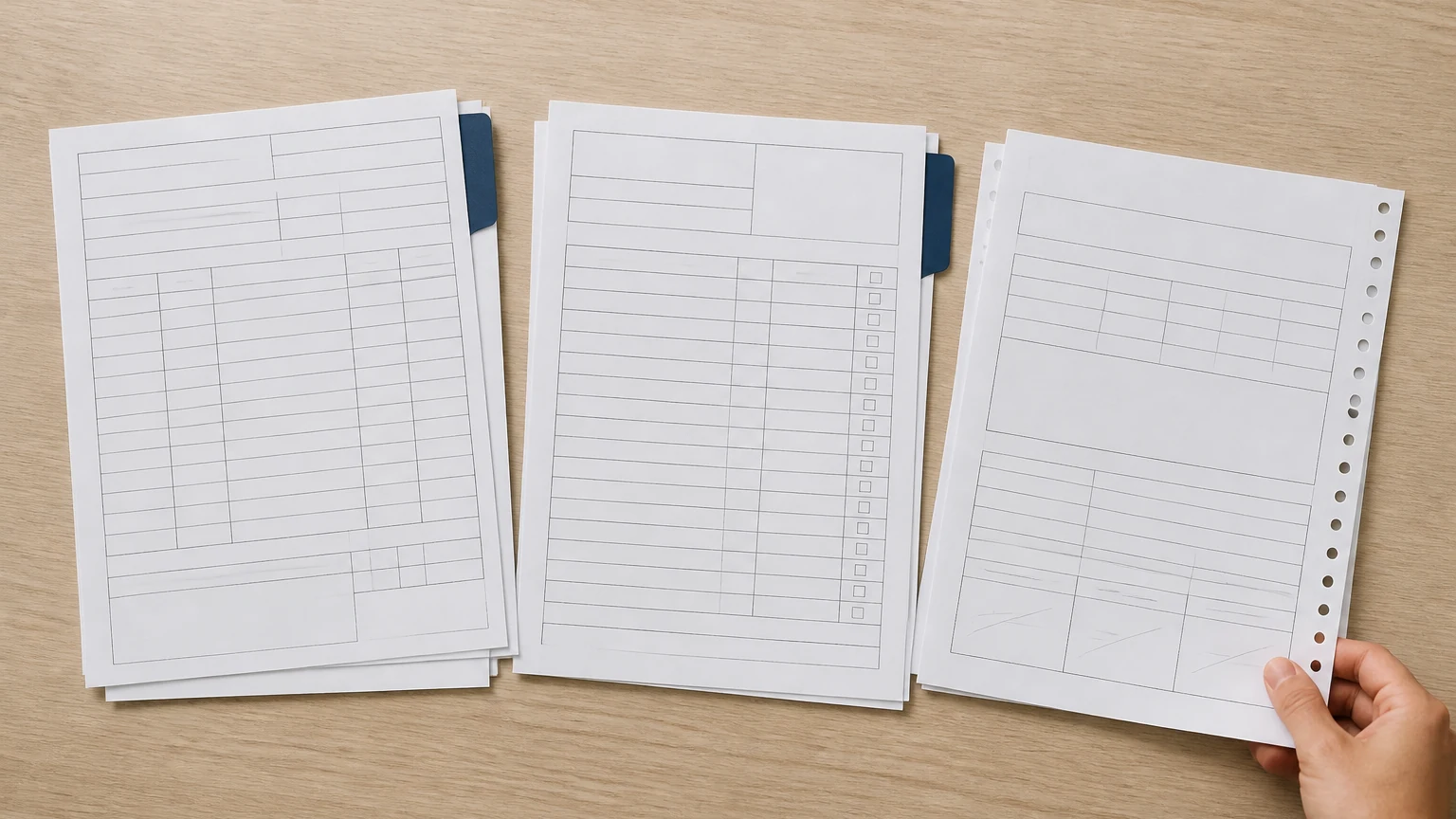
The commercial invoice is the document customs uses to determine duty. It needs the seller and buyer, invoice number and date, a precise description of the goods, quantity, unit price, total value, currency, the agreed Incoterm, and the origin of the goods. Where the invoice is incomplete, the shipment risks either an undervaluation challenge or a delayed valuation query.
The description is where most problems start. “Hardware parts” tells a customs officer nothing. A description should let someone who has never seen your product identify the item, understand what it is made of, and match it to a tariff line. Include model numbers, material composition, and what the item is used for. If you are shipping a mixed carton, invoice the line items separately rather than collapsing them into one generic row.
Two additional points. First, the invoice value is not a negotiation lever — an artificially low declared value is the fastest route to a penalty, and customs can reassess using their own valuation rules. Second, the invoice total should reconcile exactly with the packing list and the customs declaration; where three documents quote three different numbers, expect the shipment to be held while someone asks why. If you want a machine check of the arithmetic and structure before submission, run the file through the Commercial Invoice Checker first.
Packing list and the weight data everything else depends on
The packing list describes how the goods are physically packed: number of packages, marks and numbers, contents of each package, net and gross weight per package, and dimensions. It is the document carriers and customs use to check that what is declared matches what is being moved.
Exporters underestimate the packing list because it looks administrative. In practice, its numbers propagate through the entire shipment. Gross weight drives freight cost. Dimensions drive volumetric weight, which determines whether your cargo is billed by weight or by volume. Item counts drive the receiving side’s ability to verify delivery. If the packing list says eight cartons and the bill of lading says nine, you have created a discrepancy across three parties before the vessel has even sailed. Our guide to the bill of lading definition explains why that document is the one in the set that carries title as well as describing the cargo.
Build the packing list from measured package data, not from the sales invoice. The Packing List Builder and the CBM & Carton Calculator are built for exactly this — deriving carton volume and total measurement from per-package inputs so the numbers on the packing list, the freight booking, and the invoice agree.

HS codes and customs valuation: where duty is really decided
The HS code assigns your product to a tariff line, and the tariff line determines the duty rate, whether any preferential treatment applies, and which regulatory requirements attach to the goods. A code that is wrong by a single digit can mean paying duty at a higher rate, losing a preferential rate you were entitled to, or triggering a licence requirement your product does not have.
Two customs realities follow from this. First, the classification is yours to defend — if an authority disagrees with your code, the burden of explaining the reasoning falls on the exporter. Keep the rule, explanatory note, or prior ruling that supports your choice on file. Second, valuation is not simply the invoice price at the port of loading. Customs may add international freight, insurance, and sometimes royalties or assists depending on the destination’s valuation method. That is why the shipped FOB value and the dutiable value used for assessment can differ.
Practical checks worth running before every submission: verify that the code format and structure are valid with the HS Code Structure & Format Checker, and confirm which costs belong in the customs value using the Customs Valuation Method Guide.
Incoterms: the line that decides who prepares which document
Incoterms are often treated as a price question — where does my cost stop. Their operational effect is on documents. The term determines which party contracts the carriage, who arranges insurance, at what point risk transfers, and therefore which documents one side must produce and hand over. The party that arranges that movement, and the charges its quotation leaves out, are covered in our guide to what a freight forwarder does.
Under FOB the exporter delivers the goods on board and the importer normally arranges the main carriage; the exporter’s file centres on the commercial invoice, packing list, and export declaration. Under CIF the exporter contracts the carriage and insurance, so the bill of lading and insurance certificate sit in the exporter’s document set and are passed on as part of the payment terms. Under ex-works terms the exporter’s documentation obligation largely ends at their own premises — but the export declaration still has to be handled correctly, and this is a frequent source of dispute when it is assumed the buyer will sort it out. Where payment is to be secured by a draft rather than by an open balance, our guide to the bill of exchange covers how that instrument is drawn, accepted and paid.
Because document responsibility follows the term, agree the term before drafting the document list. Terms such as FCA Incoterms 2020 move the handover point to the carrier, which changes which documents you are responsible for. The Incoterms® 2020 Selector maps each rule to the obligations it creates, which makes it straightforward to see which documents you are actually responsible for.
What incomplete documentation actually costs
It is tempting to treat a missing document as an administrative inconvenience, since the goods are sitting safely in a container. Operationally it is a cost event, because a shipment held at the border accrues charges that continue whether or not it moves.
| What goes wrong | What it triggers downstream | How to prevent it |
|---|---|---|
| Invoice and packing list values or weights disagree | Entry query, inspection, storage while waiting | Reconcile both files as a pair before submission |
| HS code inconsistent with the description | Reclassification, retrospective duty, penalties | Keep supporting classification reasoning on file |
| Missing certificate of origin | Preferential rate lost, duty paid on full rate | Confirm origin requirements when the order is booked |
| Under-declared customs value | Reassessment against the authority’s valuation | Build the customs value from the applicable valuation method |
| Port, terminal, and inland delivery charges not planned for | Total delivered cost exceeds the freight rate you budgeted | Model total delivered cost, not just freight |
The last row is the one exporters notice only after the fact: duty, terminal charges, and inland delivery can move the total materially away from the freight rate you booked. Model it up front with the Landed Cost Calculator, and estimate the duty component separately with the Customs Duty & Import Tax Calculator.
Turn the file into a reusable template
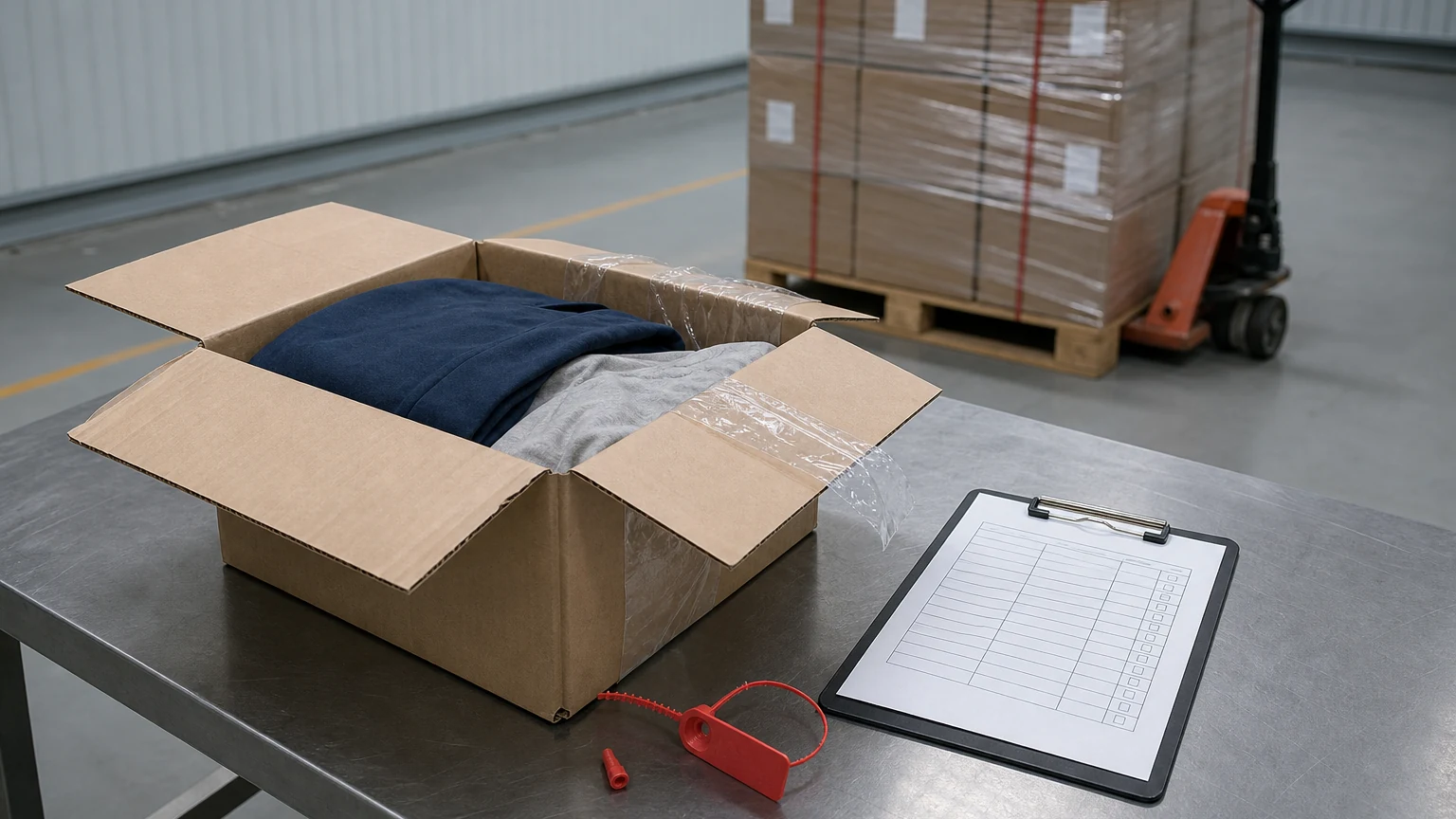
Once you have shipped the same product more than twice, the documents stop being individual projects and become a system. The exporters who rarely get held up are not the ones with the best knowledge — they are the ones who templated the work so that a missing field is visible before submission rather than after arrival.
Start by freezing the parts that do not change: your seller details, bank details, standard description wording for each product, and the supporting classification notes. Then make the variable fields explicit and few — buyer, quantities, weights, dimensions, invoice value, currency, Incoterm, and shipment dates. A proforma invoice made from the same data as the commercial invoice removes a whole class of mismatch, which is what the Proforma Invoice Builder is designed around.
Finally, treat shipping marks as part of the data set rather than something added by the warehouse. Marks that match across the packing list, cartons, and transport document are what allow the receiving side to check a delivery in minutes instead of hours; the Shipping Marks Generator produces consistent marks you can reuse across shipments.
Four mistakes that cause most of the trouble
- Treating the description as marketing copy. A customs description answers three questions: what is it, what is it made of, what is it for. Superlatives do not help; specificity does.
- Preparing documents sequentially instead of as a set. The invoice, packing list, and declaration must agree with each other. Preparing them in isolation and comparing them at the end is how discrepancies survive to the port.
- Assuming the forwarder covers compliance. A forwarder manages carriage. Classification, valuation, and origin documentation remain the exporter’s responsibility, even when a broker files the entry on your behalf.
- Choosing a carrier on rate alone. A lower headline rate with a slower or less predictable service can cost more once storage and delay are included. Compare quotes on comparable terms using the Freight Quote Comparison Calculator rather than comparing two different Incoterms.
The common thread across all four is treating documentation as a series of separate tasks rather than as one dataset. When the invoice, the packing list, and the declaration are produced independently by different people at different times, the differences between them stay invisible until someone at the border compares them line by line. When all three are generated from the same underlying shipment record, those gaps surface while the goods are still in your warehouse — where fixing them costs nothing.
What to do next
Pick your next shipment and build its document set from the checklist rather than from memory. Confirm the Incoterm, lock the commercial invoice description to the HS code you can defend, and make the packing list numbers come from measured carton data. Those three steps remove the majority of avoidable clearance delays — and they take an afternoon to set up once. If you ship to more than one destination, build the file per destination rather than maintaining one generic set, because origin rules and compliance requirements differ by market.
After that shipment clears, review the file once against what actually happened: which documents the carrier asked for, which the broker requested, and which the destination authority queried. That record becomes your standard file for the product — and it is the fastest way to stop answering the same questions on every subsequent order.
Start with the Export Document Checklist, and keep it next to the shipment rather than in a folder you open at the end.